
Keycap Guide
What is ABS Keycap? A-Z Explanation for Newbies

When you step into the world of mechanical keyboards, you’ll be flooded with a ton of terminology: switches, plates, stabs, and especially “keycaps.” Among them, the two names you’ll hear most are undoubtedly ABS and PBT. Most keyboards, from budget to high-end, start with a set of ABS keycaps. So, what are ABS keycaps? Why are they so popular yet also controversial? This article will explain everything you need to know about ABS keycaps, from their meaning, characteristics, durability, and whether they are truly “good” or “bad.”
What Do ABS Keycaps Mean? (ABS Keycaps Meaning)
Quick Answer (Featured Snippet): ABS keycaps are key-tops made from a type of plastic called Acrylonitrile Butadiene Styrene (abbreviated as ABS). It is a very common thermoplastic polymer that is easy to process and has a low production cost, commonly found on most pre-built mechanical keyboards.
ABS plastic is a material you encounter daily. It’s used to make monitor casings, computer mice, and even LEGO bricks.
ABS is widely used in keycap production for 3 main reasons:
- Easy to Mold: ABS is very pliable at high temperatures, allowing manufacturers to create sharp and detailed legends, especially with double-shot technology.
- Vibrant Colors: ABS plastic takes color very well, resulting in keycaps with bright, vibrant colors—something its rival, PBT, struggles with.
- Cost: The production cost of ABS is lower than PBT, which helps reduce the overall price of the keyboard, making them more accessible to newcomers.
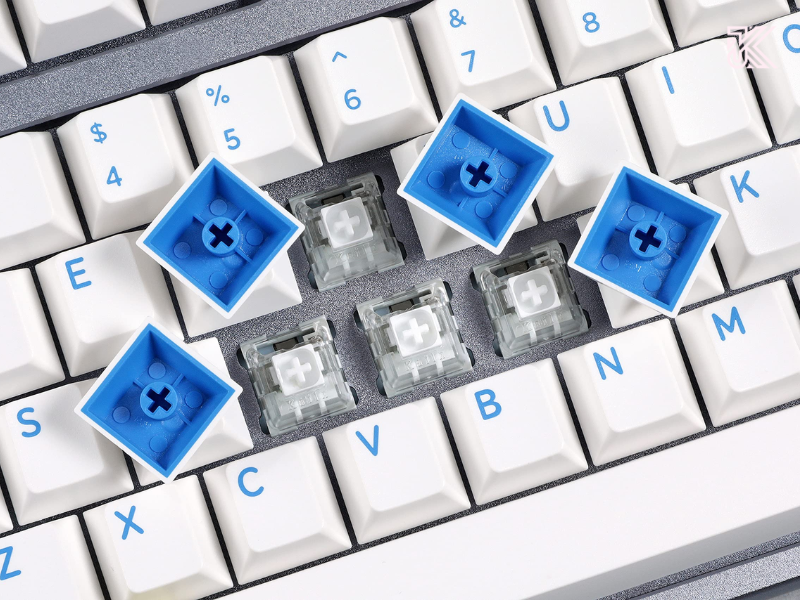
Key Characteristics of ABS Keycaps
To identify and evaluate ABS keycaps, you need to pay attention to these three core characteristics.
Typing Feel
This is my personal (Experience): ABS keycaps provide a very fast and smooth typing feel. Their surface has no texture; your fingers glide very easily.
In terms of sound, because ABS plastic is thinner and lighter than PBT, it tends to produce a clearer “clacky” (higher-pitched) sound, rather than the “thocky” (deep and full) sound of PBT.
Color and Design
This is the absolute strength of ABS.
ABS plastic is very easy to color-match, allowing for keycap sets with extremely vibrant and accurate colors. It is also the perfect material for “shine-through” keycaps, helping the RGB LEDs on your keyboard shine brightly.
Most high-end, expensive “custom” keycap sets use ABS (e.g., GMK) because of its ability to reproduce colors and the sharpness of its legends when double-shot molded.

Why Do ABS Keycaps Shine?
This is the biggest and most talked-about “drawback” of ABS. “Shine” is the phenomenon where the keycap surface (usually on the spacebar, A, S, D, E, W) wears down and becomes glossy and slippery.
- Cause: An original ABS keycap surface has a micro-texture. Over time, friction, heat, and the oil (sebum) from your fingers will wear down this texture, causing the plastic surface to be “polished.”
- Note: Keycap shine does not mean they are “dirty.” It is permanent physical wear on the plastic’s surface. You can clean off the oil, but you cannot remove the shine once it has appeared.
ABS Keycaps Durability
Many people confuse “shining” with “low durability.” So, what is the actual durability of ABS keycaps?

Average Lifespan
In terms of physical durability (breaking, cracking), ABS keycaps are very durable. You can hardly break them under normal use.
However, if “durability” is defined as the ability to retain its original look and feel, then ABS keycaps have a fairly short lifespan. They will start to show shine after just a few months of use (from 3 to 6 months) for regular users.
Compared to PBT (which can take many years to shine, or never shine at all), the ABS surface wears down significantly faster.
How to Increase Durability and Limit Shine
You cannot completely prevent ABS keycaps from shining, but you can slow down the process:
- Wash your hands regularly: Always use the keyboard with clean, dry, oil-free hands.
- Clean regularly: Wipe the keycaps every 2 weeks with a damp cloth and mild soap to remove oil buildup.
- Avoid chemicals: Never use alcohol or strong detergents, as they can damage the ABS plastic surface.
- Upgrade keycaps: If possible, look for “thick ABS” keycap sets or double-shot ABS keycaps (like those from GMK). They will still shine, but the plastic quality and legends will be much more durable than the thin ABS keycaps that come with stock keyboards.

ABS vs PBT Keycaps Comparison – Which Should You Choose?
This is the classic question for newcomers. Here is a quick comparison table to help you decide.
| Feature | Keycaps ABS (Acrylonitrile Butadiene Styrene) | Keycaps PBT (Polybutylene Terephthalate) |
| Feel | Smooth, slick, fast-gliding | Textured, “gritty,” grips fingers |
| Sound | “Clacky” (High-pitched) | “Thocky” (Deep, full) |
| Shining | Shines very easily (after a few months) | Very resistant to shine (durable) |
| Color | Very vibrant, vivid, good for shine-through | Slightly duller, hard to make bright colors, poor shine-through |
| Legend Durability | Fades easily (if pad-printed), durable (if double-shot) | Durable (if dye-sub or double-shot) |
| Cost | Cheaper | More expensive |
When to Choose ABS
- You are a beginner with a limited budget.
- You love RGB LEDs and want your keyboard to shine brightly.
- You prefer a smooth, slick typing feel without texture.
- You want keycap sets with unique, vibrant colors (e.g., GMK clones).
When to Choose PBT
- You hate the feeling of shiny, greasy keys.
- You want a “buy it for life” keycap set that will last for years.
- You prefer a more solid, substantial typing feel with a textured surface that grips your fingers.
- You don’t care much about having the brightest RGB LEDs.
Are ABS Keycaps Good or Bad?
Summary of ABS Pros and Cons:
- Pros: Inexpensive (for stock keycaps), vibrant colors, smooth feel, pleasant “clacky” sound, perfect for RGB LEDs.
- Cons: Shines quickly, feels a bit “thin” (with cheaper types), cheap printed legends can fade.
Conclusion: ABS keycaps are perfectly “good” for beginners or those who prioritize aesthetics, color, and RGB.
How to Clean and Maintain ABS Keycaps
To keep your ABS keycaps looking new, follow these steps:
- Remove keycaps: Use the included keycap puller. Never use your fingers or a screwdriver, as you could break the switch stem.
- Soak in solution: Soak the keycaps in a bowl of warm (not hot!) water mixed with a few drops of mild dish soap for 30 minutes.
- Scrub (If necessary): Use a soft brush (like an old toothbrush) to gently scrub stubborn stains.
- Rinse and Dry: Rinse with clean water and let them dry completely on a paper towel. Ensure the keycaps are 100% dry before reinstalling to avoid shorting the keyboard.
Frequently Asked Questions (FAQ)
Do double-shot ABS keycaps shine?
Yes. The “double-shot” technology only relates to how the legend is created (using two molds of plastic injected into each other) to ensure the legend never fades. It does not affect the surface of the keycap. The surface of double-shot ABS keycaps (including GMK) will still shine over time.
How do you “fix” shined ABS keycaps?
You cannot “fix” them. As explained, shine is permanent wear on the plastic surface. Some people try using a “magic eraser,” but this is effectively just abrading the surface further, making it unevenly textured and potentially ruining the keycap.
Is ABS plastic toxic?
No. ABS plastic is a very stable and safe material that has been thoroughly tested. It is widely used in home appliances (blender casings) and children’s toys (LEGO). You can be completely at ease using it daily.
We have now gone through everything you need to know about “what are ABS keycaps.” In summary, ABS is a versatile, affordable keycap material, and it is the king of color and RGB effects. Its biggest drawback is the “shining” phenomenon over time, but this is a characteristic of the material, not a flaw. If you love a smooth typing feel and a vibrant setup, don’t hesitate to choose ABS. If you hate shine and need something “built to last,” PBT might be the better choice.